Graycare (graycare.net) is a participant in the Amazon Services LLC Associates Program, an affiliate advertising program designed to provide a means for us to earn fees by linking to Amazon.com and affiliated sites. Learn More

Credit cards, debit cards, gift cards, insurance cards, membership cards? Found on the ground?
Graycare is NOT a lawyer.
When you’re in the city and spot a credit card on the ground…
By doing the right thing, you can make the situation win-win by protecting a stranger from losing money while protecting yourself from liability.
What should you do?
Should you pick it up?
Should you leave it there?
When the credit card lost by someone else has now been found by you, here’s what you should do…
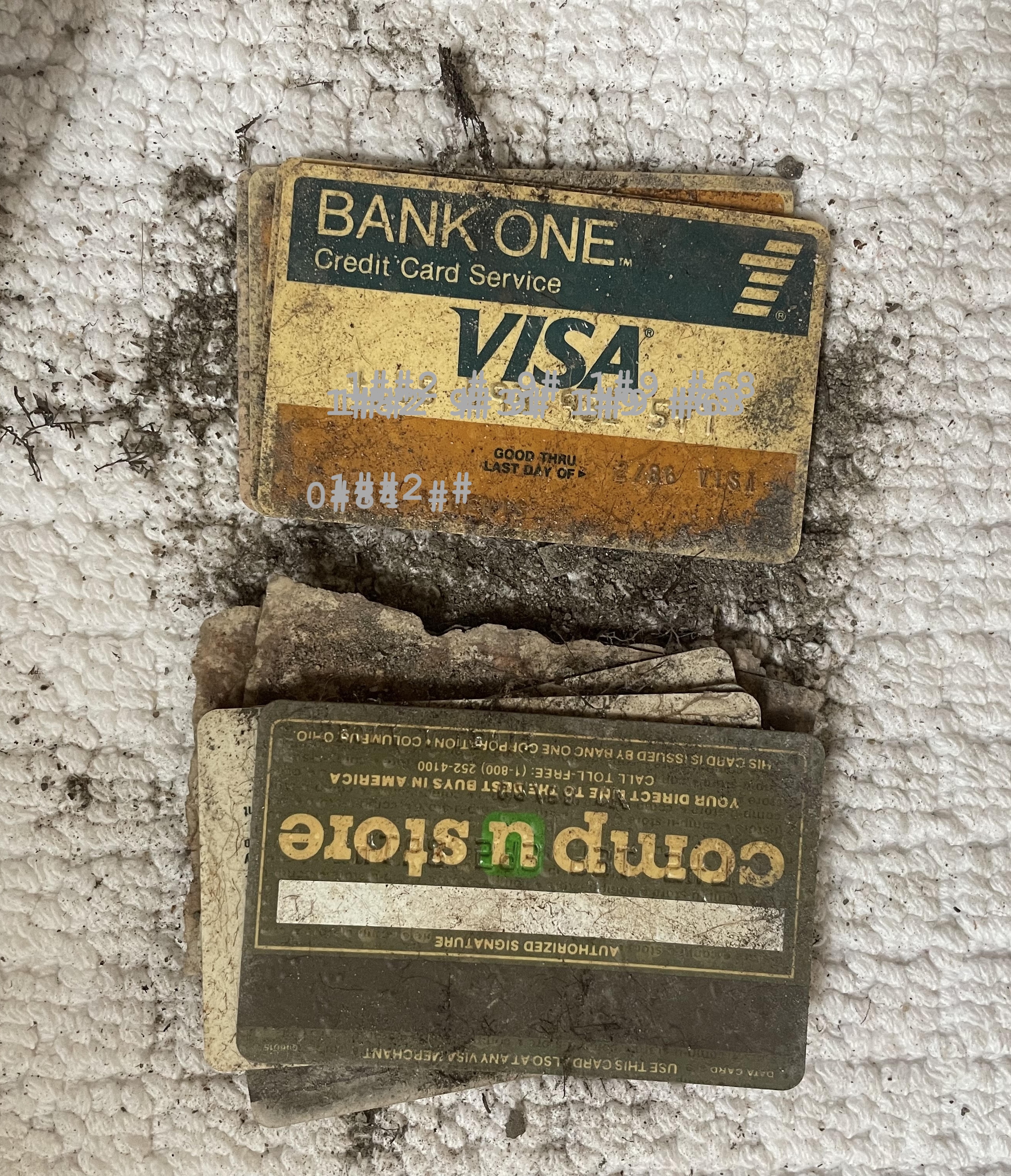
Step #1 is to determine your first action. Should you pick it up and do something about it? Or should you leave it there and ignore someone else’s problem.
The person who lost their credit card is at risk when bad actors steal the cash inside the card.
You become part of the story when you touch the lost credit card staring at you from a sidewalk square.
Don't touch the credit card before you make a plan.
If you don't touch it, then it's not your problem.
Observe and think rationally.
What’s your plan?
Ignoring the credit card you’ve found is the safest thing to do for YOU.
However, by ignoring the credit card, the credit card owner has not been helped out.
I’m interested to know how many Americans would walk right by? Versus how many would feel a moral obligation to help out the person who’s plastic cash is lost shivering cold in the public. What would Jesus do? What would you do?
If you touch the lost credit card, then you’re obligated to ensure a positive outcome.
Maybe it’s your responsibility. Maybe it’s the liability a finance lawman lays on you later.
Now that you’ve touched the credit card, do the right thing and proceed to Step #2.
Graycare is NOT a financial expert.
Step #2 is to blind yourself to information that adds potential liability.
Do not go looking at the credit card number.
Do not go looking at the cardholder name.
Do not go looking at the expiration date.
Do not go looking at the card security code.
What about the credit card security code? Common security codes include 4 or 6 digit Card Verification Codes (CVC) and Card Verification Values (CVV).
The idea is to ONLY find the needed information.
By blinding yourself to information that could be used to make payments or withdraws (i.e. steal the card owner’s cash), then you’ve distanced yourself from liability if it turns out the card was, is, or will become stolen. You can’t steal cash from inside the card when you don’t know the numbers required to steal cash.
By intentionally limiting your eye-witness and hands-on knowledge to know the company and call their 1-800 number, you don’t assume so much potential liability.
Graycare is not a lawyer.
Where to find the 1-800 number?
It’s usually found on the back of the card in fine print that is bold.
Where to find the company name?
The company logo - indicative of the company name - is usually found on the very corner of the front of the card.
Now get ready to call the company.
Call the credit card company’s 1-800 number, and be prepared to press buttons then speak one sentence.
Press buttons in order to speak with an operator, or even try to say the word “Operator” / “Customer Representative” / “Speak with a Person”.
If you’re still not talking to a real person, then listen to the automated instructions being spoken to you buy a human computer.
Try to press buttons that lead to the “Lost Card” or “Report Stolen Card” section of the pressing buttons.
Secondarily, press buttons that might take you to a person who knows about “Payments” or “Billing”.
Maybe you’ll hear which button to press, in order to speak with a real person.
As soon as you are connected with a real person who represents the credit card company, then you warm and friendly say one sentence:
“Hello, I found a lost card from {The Credit Card Company}, and I am calling the 1-800 number on the back of the card. What should I do next?”
If they ask you for the details such as the credit card number, the cardholder name, the expiration date, or security code, then please respond with one sentence:
“I do not know the {Credit Card Number}. Can I read it to you now?”
The customer representative on the phone might need to know what’s written on the credit card in order to protect the cardholder.
Since you blinded yourself from senstive credit card details at Step #2, now prompt the customer representative give you permission.
Once the customer representative gives you permission, then you read aloud the credit card details, then the liability shifts to the credit card company.
Step #3 isn’t a sneaky tactic. The job of the customer representative is to solve their credit card company customers’ lost card problems while protecting good samaritans involved.
Proceed with an attitude of respect when speaking to credit card company customer service people on the phone.
Step #4 is my favority part.
It’s also the final resolution to protect the cardholder.
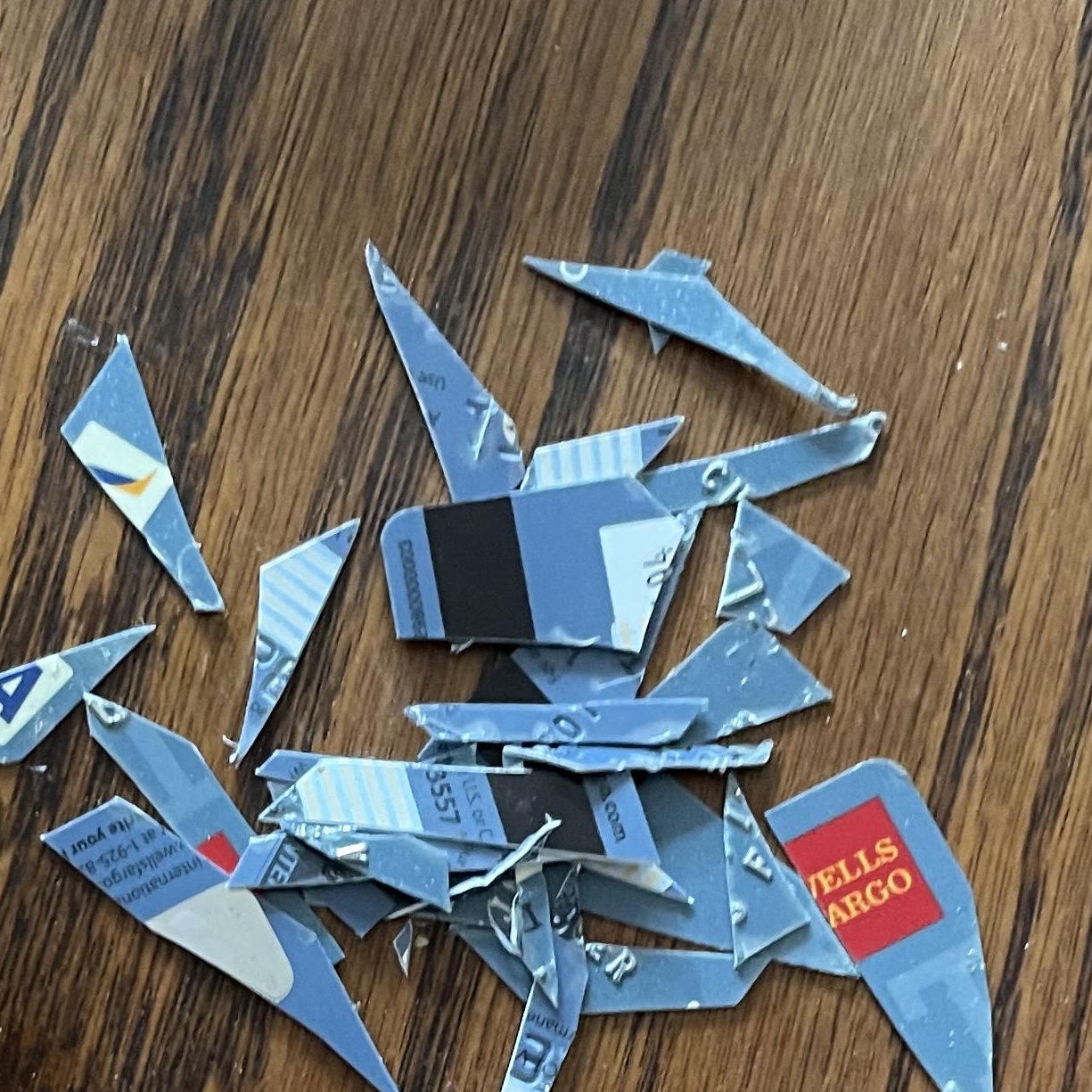
Safety first, use strong household scizzors to cut the credit card into strips, then toss the strips into two different trash cans.
The strips you cut should make credit card details incomprehensible.
Splitting the bundle of credit card scrap strips into two trash cans makes it impossible for one trashpicker to to attain complete credit card details. Scrupulous effort to piece the pieces together into a cypherable credit card number would only render frustration in such a thief when half the strips begone.
After calling the credit card company in Step #3, and destroying the credit card in Step #4, your duties are complete.
Cards, cards, and plastic cards. Plastic cards including credit, debit, gift card, insurance card, membership card, or any other swany card I find lost by you…
I will protect you by destroying your plastic card which may or may not hold the value of money.
Swipe it, plug it, tap it, bop it.
I will read the safety instructions on the scizzors in my house, then cut the credit card into thin strips that make credit card details unreadable. This is the best I can do with my resources.
Graycare is NOT a doctor.
Titanium cards - forged in forever metal from deep volcanic trenches - are different in terms of destruction.
The one time I found a titaneium card, I used a hammer on my lawn to bend the metal card out of shape, then I used a phillips scredriver to scratch off the credit card details.
The person whose titaneum credit card I protected with hammer and screwdriver sure won the jackpot, and I feel pretty good about it too.
Graycare is NOT a doctor.
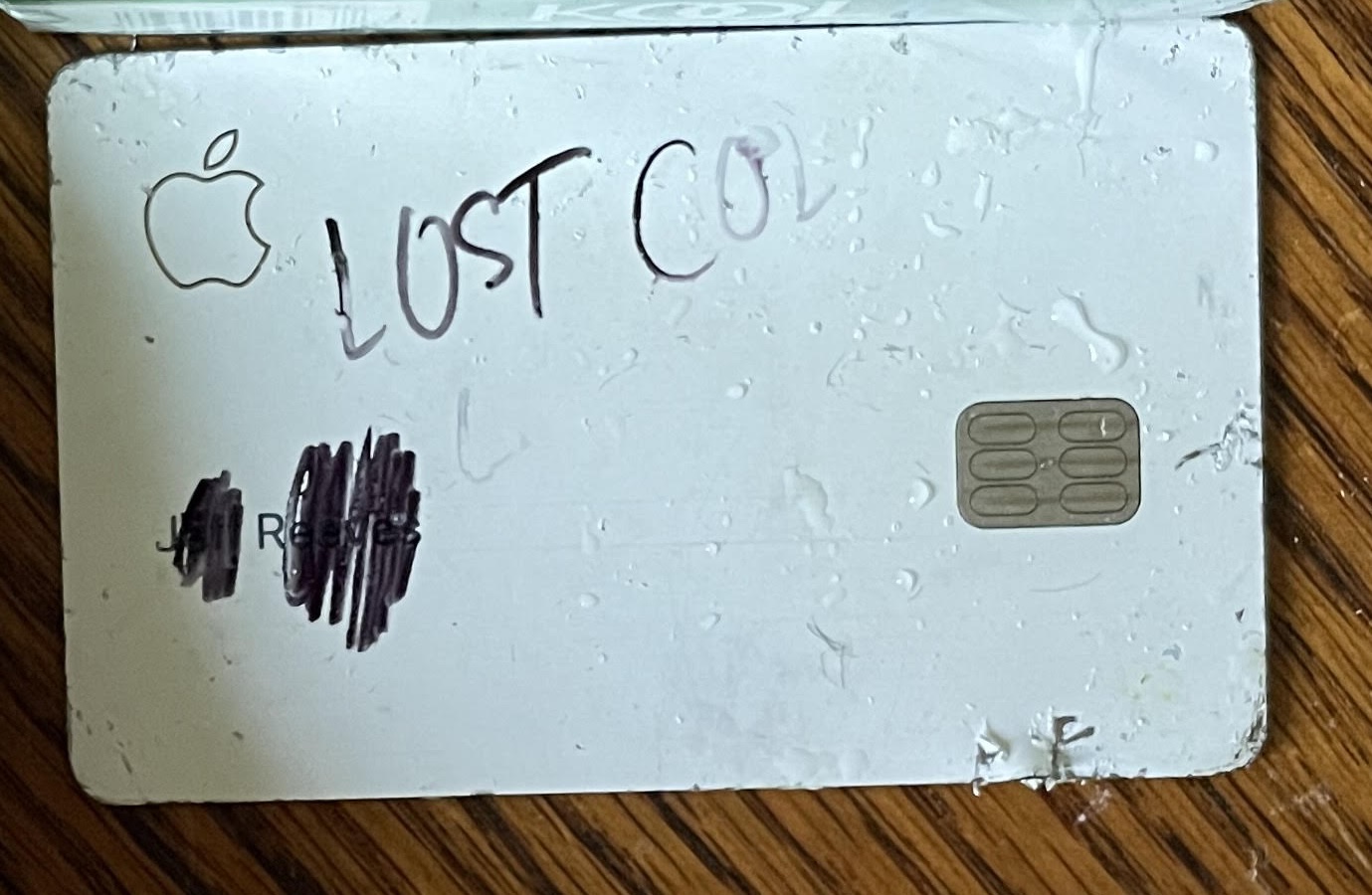
When you find a lost credit card, or especially debit card, what would Jesus do? What would you do?
It’s a funny dillema when it’s a gift card you find.
If you find a Dollar General gift card on the ground, you can call Dollar General’s 1-800 number on the back of the card…
…Or you could take that gift card to your nearest Dollar General and ask the store clerk about it, in a respectful manner.
Maybe you’ll be able to gather proverbial good samaritan tax. If there’s nickels and dimes left in the gift card balance, maybe the store clerk will just let you buy something with it.
Come over hear and see what I found when I was minding my own business and all of a sudden.
Here’s that 1-800 number to call first thing cuz I don’t know a thing.
The method outlined in this post is OK for good intentions and the willingness to elimitate further risk for the cardholder. They should thank you for helping them out.
Graycare is NOT a lawyer.