Graycare (graycare.net) is a participant in the Amazon Services LLC Associates Program, an affiliate advertising program designed to provide a means for us to earn fees by linking to Amazon.com and affiliated sites. Learn More
Here’s a funky question for y’all caregivers to ponder…
If you’re already a family caregiver, should you go get a caregiver certification? It might take an in-person or online training course, a final exam, and even logging work hours under supervision. Is it worth it? What do you actually need to get a job as a caregiver in Michigan?
I’m walking in these shoes today, thinking about the benefits getting a caregiver certification could bring me and my family as we manage our caregiving responsibilities.
The thing is, most online resources talking about how to get certified for caregiving, they’re “career path pieces”. My situation is different. I’m already a family caregiver for my aging father. I’m looking for avenues to upgrade how my family manages my father’s care. Will getting certified as a caregiver (online or in-person from Gratiot County, Michigan) help me towards this goal?
I’ve gone to school and received on-the-job education before. People give your training so that you learn how to do a job, and do it according to the book.
Great, with that image in mind, let’s dive into some details. It’s a nice dream, but realistically how to get there?
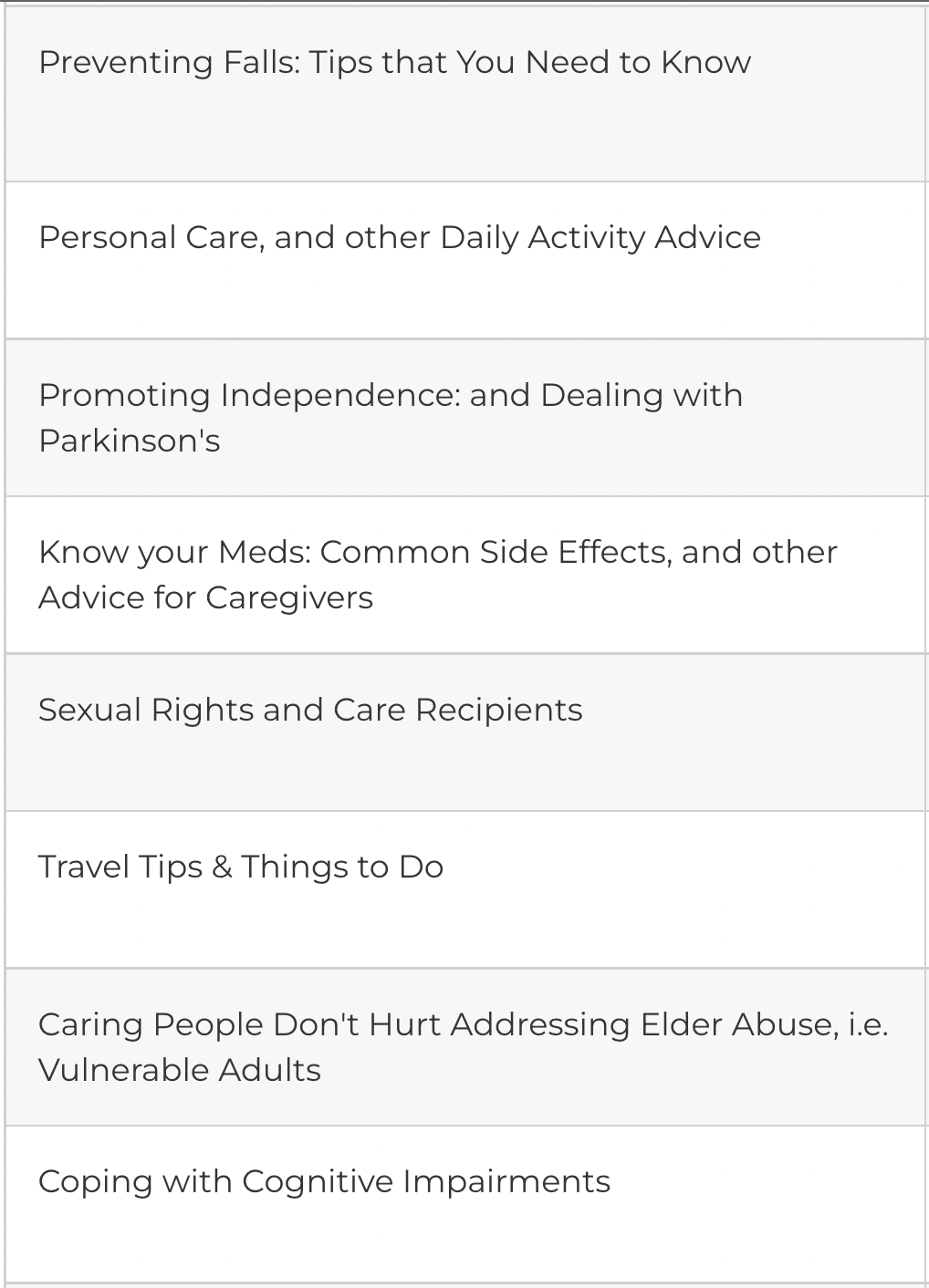
I took a peak at the types of ongoing “refresher training” (often called CEUs) the State of Michigan encourages for direct care work staff at AFCs (Adult Foster Care), and it’s a relevant glimpse into the types of caregiving skills you’ll need to pickup in order to become a certified caregiver.
In reality, the profession of caregiving is just as diverse as the care required. That's worth major street cred where I'm from.
This is the first important thing you need to figure out on your path to becoming “accredited”. Being accredited by who? With a license or a certificate? Michigan Caregiver License vs Certificate: What’s the difference?
The main difference between a CNA and HHA is this.
Legally, Michigan doesn’t require any specific certification for HHAs. But if you want to work for an agency working with Medicare or Medicaid, you have to get a federal-level HHA certification.
A Certified Nursing Aide (CNA) is the real deal license for caregiving in Michigan. It takes a big commitment to get a CNA, including completion of a course and then passing the Michigan State CNA exam.
You can find an in-person school or online course to get a CNA, but remember, it’s a career path. As such, obtaining a CNA License in Michigan requires lots of time, effort, and performance.
Look for schools or programs offering CNA.
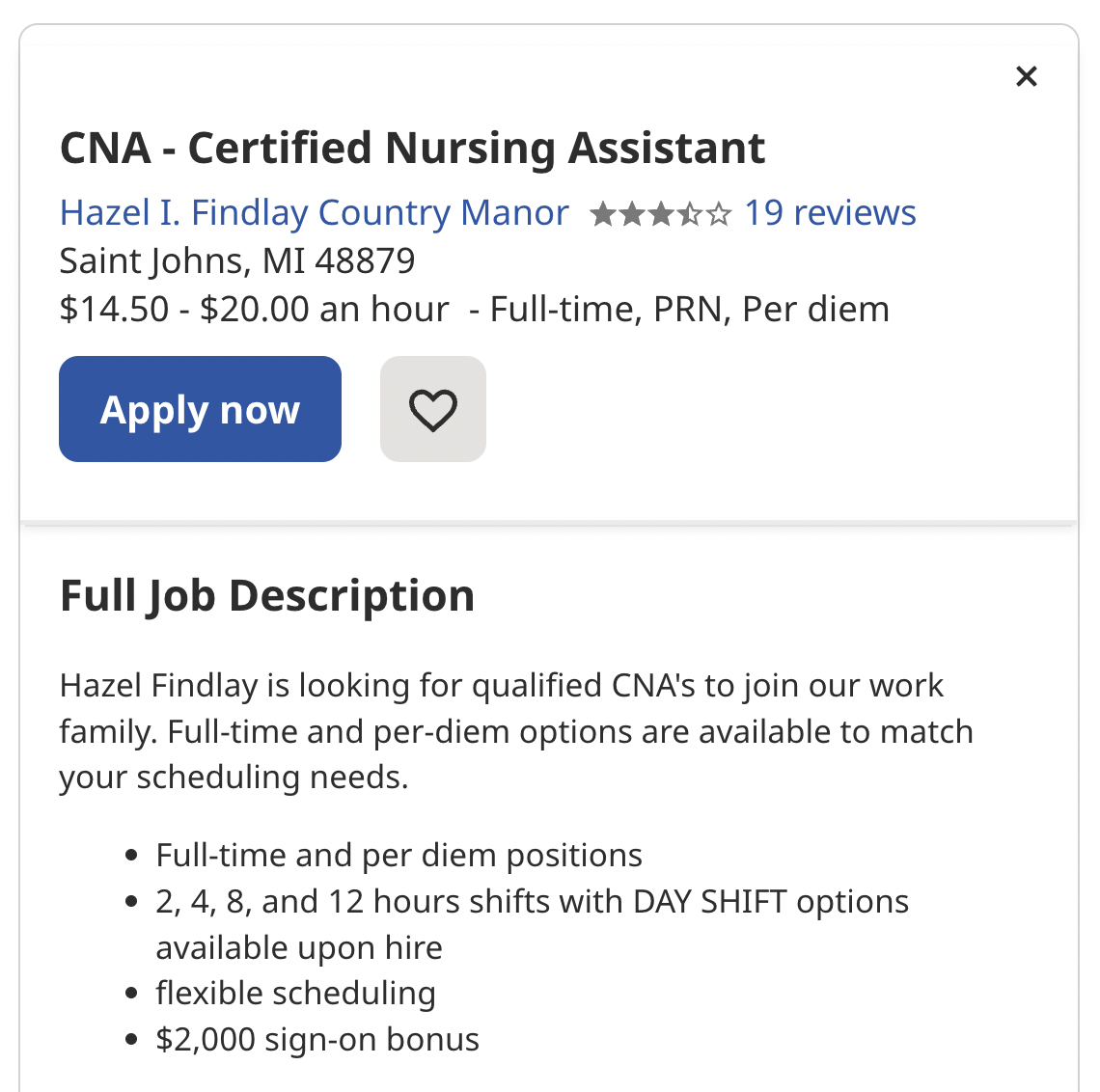
After all said and done, it costs about $125 to take the CNA exam in Michigan. As a CNA, you’ll probably make between $15.00 and $20.00 per hour if you make a career of it.
How long does it take? CNA programs usually take 4 to 16 weeks for coursework, but you can’t forget the 75+ hours of training and instruction you must complete as part of the program.
To get started, Michigan.gov recently made a “Nurse Aide Registry and Testing Services Announcement”.
Effective April 1, 2022, the Department of Licensing & Regulatory Affairs has contracted with Headmaster, L.L.P. to provide competency evaluation testing and nurse aide registry services. The Michigan nurse aide registry and testing services are available on Headmaster's website located at: D&S - Michigan Nurse Aide (hdmaster.com)

A Home Health Aide (HHA) requires less commitment than the Certified Nursing Aid (CNA). Both are professional caregiver accreditations. The CNA has higher requirements than the HHA.
For this path, you’ll start a training program on caregiving for seniors and the elderly.
If you want to work at a non-Medicare/Medicaid agency (or start your own home health aide business), then you don’t need any certificate or license. The State of Michigan offers guidelines but lets each home health agency offer their own customized training programs.
If you want to work at a Medicare/Medicaid-related agency, then you must get an HHA certificate at the national level plus 75 hours of training.
To get started, how it works in Michigan to become a certified Home Health Aide in Michigan is like this.
Even though the state of Michigan does not require training and certifications to work as an HHA, the Michigan Home Help Program serves people on Medicare and Medicaid, which only works with Medicare- or Medicaid-approved home health agencies.
So to work as an HHA in Michigan, you still have to get certified as an HHA to satisfy federal HHA certification requirements.
Look for schools or programs offering CHHA (Certified Home Health Aide).

You can get certified nationally as an HHA in-person in Michigan or online. There are tons of programs to choose from.
Other than the common CNA license and HHA certification for caregivers in Michigan, what other types of caregiver accreditations are there?
One other is the Medical Assistant, where the scope of work specialized into medical care, as outlined on the Michigan Society of Medical Assistant’s website. Of course, there are more acronyms to learn. A CMA (Certified Medical Assistant) is accredited through the AAMA, and a RMA (Registered Medical Assistant) is accredited through the AMT.
Is it worth it for an unpaid family caregiver like yourself to get certified as a caregiver online, even if you don't want to take up a profession of caregiving? YES, several low cost non-HHA caregiver training courses with certifications are available 100% online.
My understanding is this. A CNA is like getting a degree. An HHA is only required if you're employed by an employer that requires HHA, and that employer usually offers new hires a training program with HHA certification. Despite the American Caregiver Association's claim that the Home Health Aid Certification is the same as the Caregiver Certification, from what I've seen, most online caregiver certificates don't include a legitimate HHA that'd allow you to work for an employer that requires HHA.