Graycare (graycare.net) is a participant in the Amazon Services LLC Associates Program, an affiliate advertising program designed to provide a means for us to earn fees by linking to Amazon.com and affiliated sites. Learn More
Rave involves techno, dance, party, and elevated experience.
So how do seniors rave and stay safe? Fun nursing homes organize extra fun activities for their residents.
💿 “I plan my days by the print calendar my floor manager posts on my door.”
Since people with the wisdom of age have all sorts of health considerations, safety and inclusivity are your top priorities.
Please take a safety-first approach to raving. Turning down the volume a touch to accommodate seniors’ tender ears makes gently raving your face off a touch more safe.
Nursing homes have strict rules to protect the safety and wellbeing of their residents. The nursing home authorities ultimately decide whether or not raving is welcome in the common area.
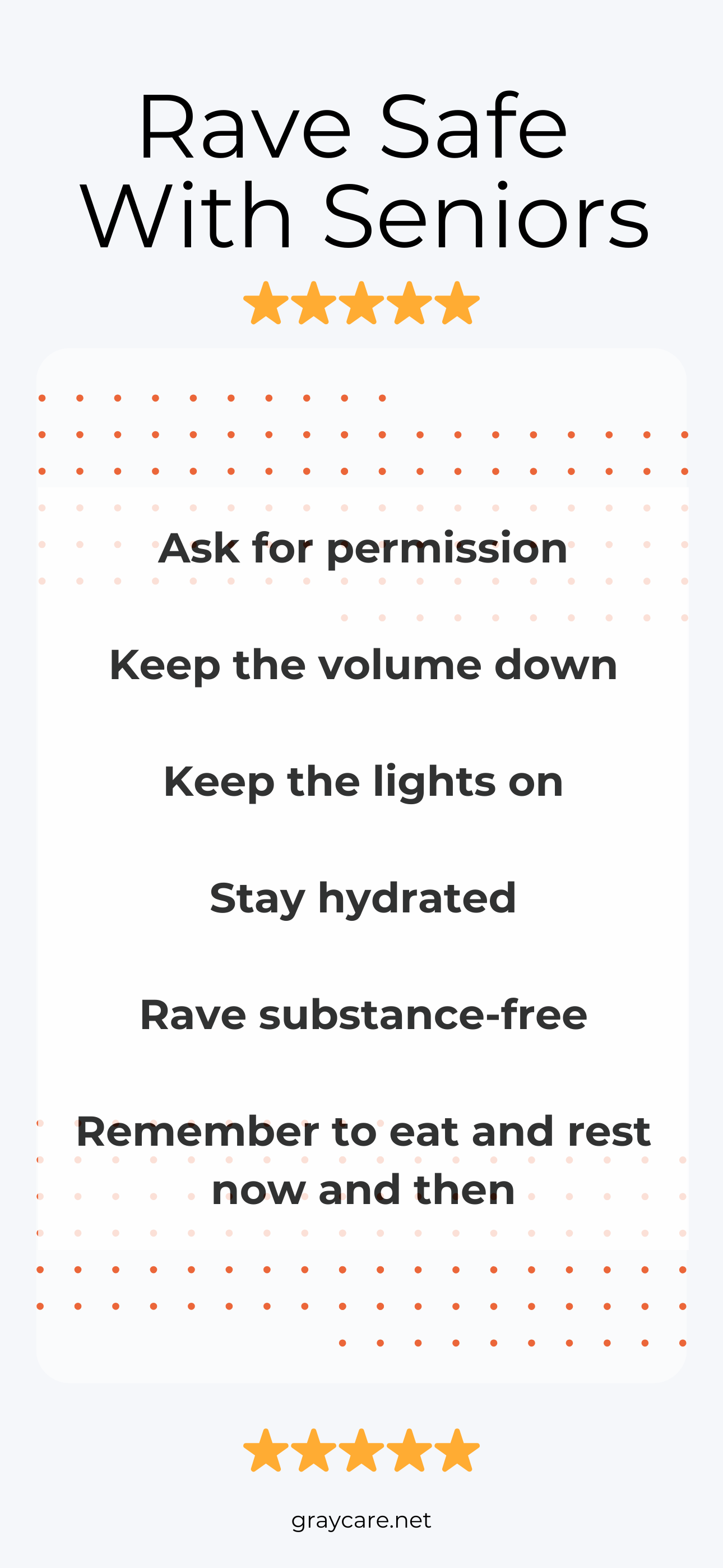
Before you throw a rave party at a nursing home, you’d better ask the nursing home managers for their permission.
It’s common for nursing homes to invite third-party businesses to service their residents. It’s less common for nursing homes to invite disc jockeys and masters of ceremony with sub bass speakers to knock your socks off.
Graycare is NOT a doctor.
Brushed up from the Department of Justice (DOJ) archives, America’s first documented rave parties took place in San Francisco and Los Angeles. By the early 1990s, party-goers and club-hoppers were raving in most metropolitan areas of the United States.
Ravers 18+ in 1987 were born after 1969, and started turning 55+ in 2024 yesteryear.
Demand for senior-friendly rave service businesses will only increase as more OG ravers age into nursing homes equipped with safe facilities for underground parties.
💿 “When the aging raver asked their floor manager to plan a rave, the floor manager responded receptively, and brought the idea to the higher-ups at the nursing home, to ask for permission.”
Some residents will expressly request to rave. Other residents, you’ll have to explain what a rave is to them. Explain rave can be heard by loud electronic techno. Explain rave can be seen by flashing lights and laser beams. Explain rave can be felt when you let yourself free.
Sleepy old folks' home residents could become disoriented when the booming bassline and shimmering symbols of a TB-313 echo down the hallway into bedridden residents’ deep healing dreams. Especially veterans with PTSD triggered by war sounds. Before you blast music in a nursing home, go door to door promoting the rave to residents and explaining how to rave safe when it’s party time.
💿 “Don’t fret — When you awake to bass, that’s time to rave.”
There might be a rule in your jurisdiction — to rave at a residential senior care facility, you must get resident and family member consent.
Asking for permission effectively promotes your rave party event in secrecy to a need-to-know basis with adjacent residents, administrators, staff, family members, and healthcare regulators — all of whom could potentially become safe nursing home ravers. It’s wonderful when asking for permission to rave from the nursing home’s larger community.
Nursing homes are only supposed to communicate the activities of their residents with designated family members — through a legal process I’m not sure about.
Graycare is NOT a Lawyer.
To put a safe rave into motion from start to stop, preventative measures can go a long way!
💿 “Eat, Sleep, Rave, Repeat — or adjusted to a nursing home: Sleep, Eat, Drink, Rave, Rest, Repeat.”
A pre-rave health screening from a licensed healthcare professional would ensure residents have the “Green Light” to go raving.
Staff onsite who can lift 50 pounds can pair up with seniors as “dance buddies”. Licensed medical staff onsite should monitor the rave for health concerns then respond first and fast to ravers in need of assistance. Licensed and non-licensed staff are invited to the party.
The nursing home common area should become a dance floor. An accessible dancefloor is a non-slip surface with walkways clear to prevent trip-and-falls. It has a place for the entertainer to plug in and seating for ravers with walkers, wheelchairs, and other mobility grooves.
The rave should have a “Chill Zone” quiet area nearby for ravers to take a break from loud music and flashy lights.
The rave should have a restroom with working plumbing for dancing people staying well-hydrated.
A nice place to rest before returning to the common area dancefloor has comfy chairs, pillows, blankets for seniors who need a break to rest aching joints and racing heart rates.
Although safe planning and prevention is the best approach, a response protocol for unexpected medical incidents such as dehydration or sensory overload should also be in place.
Dutch rave stories teach you to stay away from substances when raving. Substances are the main cause of rave-related health concern.
Classic raves from the Netherlands were studied between 1997 and 2008. (Source: NIH, December 2011) During that 12 year party, almost 4,000,000 ravers encountered about 10,000 health related incidents and a couple dozen incidents were life threatening. So only 0.3% of ravers had health problems, and the 0.0005% life threatening health problems were likely caused by substances and alcohol.
People who rave too hard on substances and alcohol generally drink water to feel better. Bottles of water are a dance festival staple. The best way to rave is by drinking plenty of water.
Stay hydrated with water on hand when raving with people 55+.
Refreshing drinks like water, sports drinks, or fruit juice are healthy choices. (But be careful of allergies and dietary restrictions.)
Alcoholic, sugary, and high caffeine drinks should be avoided because to prevent energy crashes or mix bad with health conditions and other medications.
Raving seniors can eat a meal with healthy proteins, fats, and carbohydrates before the rave to stay high on healthy nutrients later at the party.
In addition to the drinks for hydration, easy-to-eat health foods make for a good rave snack enjoyed by nursing home party friends. Nutritious rave snacks include fruit, yogurt, crackers, and protein bars.
A safe place to rave with seniors should be interactive but should not be overwhelming. The lights should be steady and bright enough for older people with vision impairments.
A big screen TV or mini-projector can be used to cast a nostalgic video.
Bubble machines are super safe with lovely bubbly!
Slow color-changing LED lights and/or soft disco balls work perfect.
Avoid strobe lights and bright lasers which could be too intense.
Black lights and neon clothing are extra fun — but requires extra caution to keep safe.
Blow up balloons with helium or breath, but can become a tripping hazard if fallen onto the floor.
With discretion for safety, LED accessories and/or glow sticks are an inclusive way for most sitting, standing, walking, and dancing seniors to join the fun. Handhelds include glowsticks and shiny disco magic LED glow wands. Wearables include hats, glasses, and jewelry.
Planning your first rave for a group of seniors who live in a residential facility with services catered to seniors should take a safety first approach.
The first thing to do is get permission from the nursing home.
The nursing home rave should be a safe, inclusive, enjoyable, and elevated party experience for seniors and staff. Keep the volume down and the lighting less intense.
Rave safe, substance-free, and stay hydrated with help onsite to oversee safe raves start to stop.