Graycare (graycare.net) is a participant in the Amazon Services LLC Associates Program, an affiliate advertising program designed to provide a means for us to earn fees by linking to Amazon.com and affiliated sites. Learn More
Therapy is for rich people right? I'm an adult son who lives with his parents and does caregiving. I also pay about $200 per month for BetterHelp. I'm satisfied with the service and also considering less expensive options.
Loneliness, guilt, anxiety, grief, aggression - the most common of the caregiver emotional woes. Every website and their uncle teaches you about the dangers of caregiver burnout, yet we are here.
Trapped inside a caregiver ant mill (a cycle of burnout and recovery).
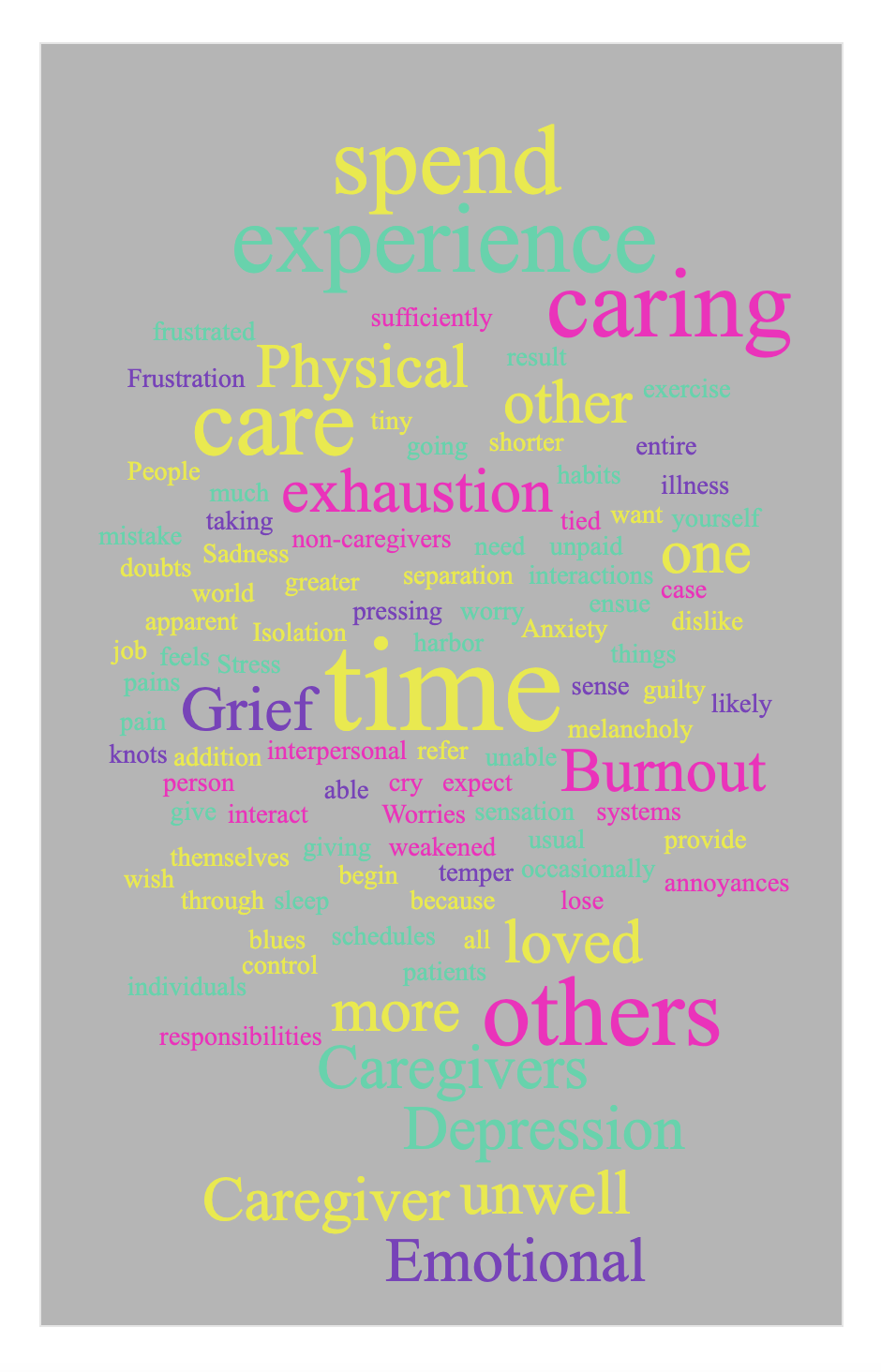
You know your personal struggle better than anyone. so here's an easy-to-digest wordcloud with many “caregiver feels” which won't be unfamiliar.
The same feeling that have brought you here, considering therapy to address these feelings that won't go away.
When a caregiver doesn’t have enough money and isn't sure whether they qualify for free or discount therapy, where to start looking?
To navigate your personal circumstances, the first question is all about insurance. If you have insurance, you have to look up how your insurance provider breaks down their coverage. You might have coverage for mental health services, or you might not.
For Michiganders with Blue Cross Blue Shield, here’s your customer portal.
If covered by your insurance, then weigh the options between in-network and out-network. Typically, in-network will be much cheaper. Check if your insurance covers telehealth, and which telehealth mental health service providers are available in-network.
Or get the out-network, which might carry a pretty good discount too.
BetterHelp, 7 Cups of Tea, Calmerry, Cerebral, FranklyHelp, or TalkSpace are popular low-cost online therapies caregivers can access.
What did I choose? I have a weekly video session with my BetterHelp therapist. When I registered, I entered that I was a low-income person, and on an honor’s system, Betterhelp allowed me to get a discounted rate.
Now after months of therapy and dealing with my dad’s condition, I’m in a much better headspace.
Most states, including Michigan have “Sliding Scale Therapy” for people who don’t have the means to fund therapy by themselves. Financial pressure is common for families who assume caregiving responsibilities at home.
Where to find sliding-scale mental health services in Michigan? The MDHHS recommends you contact the Community Mental Health Services Program nearest to you. You can also check nation-wide platforms for therapist in the state of Michigan who accepts sliding scape payments.
It’s usually writing on the counseling service’s website whether or not sliding scale payments are accepted, and how they are calcluated. The most well known platform to find sliding-scale therapy is Open Path Collective, where you can enter your zip code and see therapist profiles.
One of the best places you can look for a support group with other caregivers in-person is the Area Agency on Aging (AAA), which has 14 regions in Michigan.
With any of the the regional Michigan AAA’s, zoned by county you’ll find schedules for recurring meetings where you can hear others’ stories and (maybe) get a chance to vent your emotions.
Local in-person support groups are usually free. In rural areas where a dedicated caregiver support group is not available, you might have to settle for a support group for the particular health diagnosis your family member suffers from, and find other family caregivers there.
Online support groups are usually free too. And a plenty.
I’ve tried some, liked some, and disliked others. I’m sticking around for the whole Zoom series of one caregiver support program. One reason is because they sent me a useful and uplifting caregiver care package.
Employed people might benefit from free or low-cost mental health counseling as part of an Employee Assistance Program. Check the fine print to confirm the program is anonymous, and that the program won’t share any information with your employer. For legitimate programs, this is always the case.
I'm putting this one last simply because it's the least common for most caregivers.
Online caregiving is generally more affordable, even on logistics like the gas it takes to drive to an in-person office. You get a ton more flexibility in terms of who you pick as a therapist and which times you can schedule an appointment.
By 2023, years into or after the pandemic (I’m still not sure), you don’t need me to tell you “Telehealth” therapy by video, voice, phone, or chat - it absolutely works.
But not everyone’s 100% happy with the telehealth wave. You have to have a good enough phone, computer, or internet connection. And for people seeing the most affordable caregiver counseling possible, that’s not always the case.
Online providers of therapy, counseling, and mental health services come in a mixed bag of all types, from State-licensed experts to “person who’s mastered caregiving for their own family member and can give you good tips”.
Caregiver therapy is not a legal type, rather it's a domain many therapists specialize in.
In the United States, there’s no such thing as a “caregiver therapist license” (as far as my research has taken me), but many licensed therapists are trained and experienced in handling the particular issues and challenges family caregivers face.
Caregiver therapy serves individual caregivers as well as families managing the care of a family member. The American Psychological Association (APA) recognizes Caregiver Family Therapy (CFT) to: “Engage family caregivers in active and focused problem solving approaches related to family caregiving to improve quality of care, reduce burden and improve family functioning.”