Graycare (graycare.net) is a participant in the Amazon Services LLC Associates Program, an affiliate advertising program designed to provide a means for us to earn fees by linking to Amazon.com and affiliated sites. Learn More

My dad got Parkinson’s. Then he got Parkinson’s Disease Dementia (PDD). Now me and him try to party with our sippies every day.
Caregiving day after day gets boring, so we like to keep it fresh with new bubbly beverage delights - usually cold, sometimes hot.
He needs some help mixing his sips, and that’s one sugar-free spritzer coming up! Coke Zero Vanilla with ice today sir? If we ever do use regular glass cups with my dad, it’s under light supervision and served with ice and an elder-friendly reusable straw.
Most days, most of the day, we use two different spill-proof sippy cups with my dad: the Munchkin and the Contigo.
The rollercoaster fun of my dad’s form is - you never know which will be the bigger problem on the day: cognitive or motor. Dementia’s wonky reality changes typically couple with motor challenges from other aging related diseases. Not only is my dad having cognitive trouble problem-solving how to wet his whistle, he’s also got those neurodegenerative motor challenges.
As drinking challenges become progressively worse, they also become more specific. A simple toddler sippy cup works great for my dad now, but some years from now, he’ll likely need a more advanced drinking system designed specifically for the elderly and disabled, like a dysphagia cup or flow-control convalescent cup.
When it comes to the day if he can no longer chew or swallow solids, I will puree a Wendy’s Single just for my dad.
Different stages of dementia will deliver different drinking dilemmas a sippy cup might solve. An adult usually starts with a sippy in during their night-time routine, typically as a consequence of spilling bev in bed. The caregiver implements a measure to prevent extra work for themselves, like washing Diet Coke soaked sheets in the morning.
It is almost never the sippy cup owner’s choice to begin using a sippy cup. It’s the caregiver who makes the new house rule. And it happens like that.
Beyond the bed, my dad spilled while sitting in his chair. Now he’s only allowed to drink from a sippy cup while sitting in his chair. He spends 75% of daytime hours in his chair now.
The premise of a sippy cup is to prevent spills by controlling the flow of liquid in special ways. Spill-proof then goes without saying. Lids, caps, lips, straws, tubes, and funnels are the make-or-break feature, because the person with dementia must be both willing and able to drink from it.
Materials range from plastic to silicone and metal. Most sippy cups aren’t designed for hot water, so don’t make tea or heat wash unless the product package clearly says “Safe For Sipping Hot Liquids”.
Assistive sippy cups for the elderly commonly come with two-sided mug-style handles. We never buy handled cups for my dad. With his rigid-style Parkinson’s handle-less is the best option. That’s just to demonstrate, you need to pick out sippy cup features on a case-by-case basis.
My dad drinks with dignity using his Munchkin and Contigo, but just just because we’ve determined the Munchin is the best sippy for my dad (who’s got Parkinson’s and dementia), his needs might change, and the person with dementia in your family has his or her own needs.
Available on Amazon

Available on Amazon
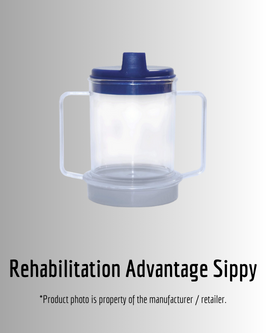
Available on Amazon
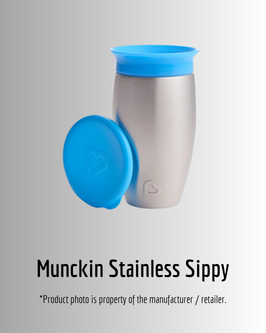
Available on Amazon
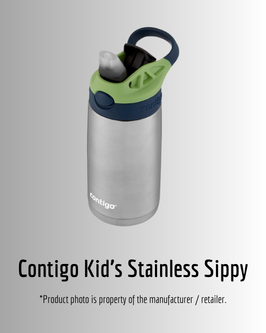
Available on Amazon