Graycare (graycare.net) is a participant in the Amazon Services LLC Associates Program, an affiliate advertising program designed to provide a means for us to earn fees by linking to Amazon.com and affiliated sites. Learn More

The raised toilet seat you choose to elevate your existing toilet has implications for everyone in the household.
An elderly family member’s needs prompt most families to first buy an elevated toilet seat. The idea of course, is to make sitting down, making, and standing up easier for the elder of the house.
But now that toilet is elevated, so the toilet seat riser you choose has to work for every pair of buns to occupy that toilet.
You may have improved the mobility for one aging family member, but remember this is a Number One and Two Discussion for the whole family to take stake.
Hoping that you can learn from my experience with urination and defecation on two kinds of raised toilet seats, here’s the run-down.
See it on Amazon.
See it on Avacare Medical.
Available in round and elongated form, with “Bolt-Down” or “EZ Lock” versions.
I’m getting away from the “Front-Twist” and going toward the “Back-Bolted”. If someone in your family has Parkinson's, join me.
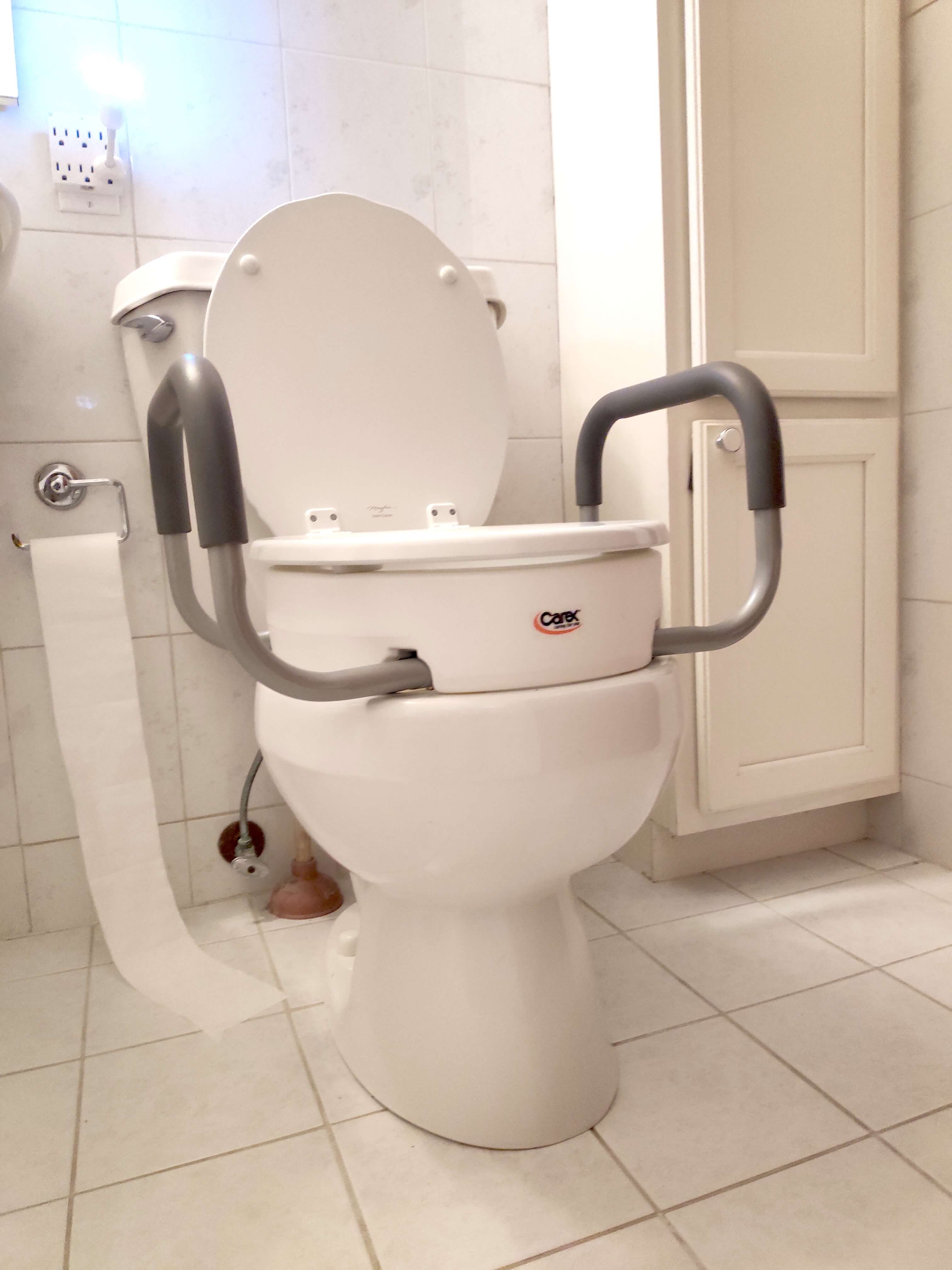
Carex is the brand I chose for my family due to its high reviews, and our desire to switch to fixed toilet (without the lock mechanism we’d used previously).
Months later, we’re still satisfied with our purchase.
See it on Amazon.
See it on Avacare Medical.
People are raving about the Medline Heavy Duty front-clamping toilet seat in its futuristically advanced gray.
Medline also offers the traditional bolt-in style elevated toilet riser.
See it on Amazon.
Vive isn’t as well known in the general eldercare industry, but their raised toilet seats seem to be well received by online shoppers in 2023.
Both their “soft cushion style” and “standard raised toilet seat with handles” have thousands of reviews as we enter the Christmas season, where families are known to eat most. (Candy, Turkey, Christmas Ham, and Champaign!)
See it on Amazon.
HealthSmart doesn’t appear unique to the ring, but I guess that’s the whole point of this particular toilet seat model.
Its universal size makes shoppers with normal sized toilets add to cart without measuring the bowl too closely. This is not an inadvisable approach, but my first impression of HealthSmart is, it’s a safe bet.
See it on Amazon.
See it on Avacare Medical.
I fell in love with Drive Medical’s mobility products, but is the bathroom space, I don’t think Drive is the best.
The Drive Medical toilet seat riser is a fine product alongside other standard toilet seat risers, it’s just not that special about it if I’m being honest.
I expected more since Drive Medical’s mobility product line is mi favorito.
See it on Amazon.
Again, you can find standard variations of this long-standing medical supply brand, but after the products we’ve reviewed thus far, the Essential Medical is another without anything especially eye-catching or noteworthy.
See it on Amazon.
What’s wonderful about Vaunn is their all-purpose selection of assistive toilet setups including all kinds of handles made to put around the toilet for ease of stand-up, sit-down, and move-around.
The back-bolted raised toilet seat that you must install is better than the front-locking raised toilet seat for the straightforward reasons of safety and comfort.
It’s better for my dad with his Parkinson’s, for me (his son) with my somewhat normal legs, as well as my wife and mother - whatever they do in the bathroom.
If you or someone in your family has an aging related diagnosis that predicts mobility challenges, then you’re in it for the long haul. It’s best to buy a long-term solution now.
A motorized tilted assistive toilet is out of my price range, so I choose the affordable and safe back-bolted style toilet seat riser.
The front-twisting style is fine. Since it’s easier to put on and take off (for cleaning, or to adjust for comfort), we got by with it for the first 20 years of Parkinson’s.
The twist-lock kept it on the john most of the time, but one-in-a-hundred it’d come loose and tip when reaching for toilet paper with your body weight off the center of the seat.
I’m an able bodied 35 year old man, and that wobbly johnny was dangerous!
It fit my toilet well when locked, but when the lock mechanism loosened up even a little, I was at risk of loss of balance and falling. My dad was too.
In retrospect, we would’ve been better off getting the back-bolted style.
We switched to the back-bolted seat because we wanted more stability. When my dad stands up from the toilet, he relies mostly on his arms to do the motor work of getting up. He mostly locks his legs like a lever for his arms to push his body away from the toilet.
I’m saying, he needs a sturdy handle.
With that tipsy risky issue, the front-twist was a disaster waiting to happen.
My family switched to the back-bolted for peace of mind.
We got extra benefits with it, too. Since we’d used the front-twist for years, it was surprising to see our nice-looking original toilet lid back on its throne.
The Carex lets you raise your seat, have sturdy handles, have a wide-mouth for male urination while standing up, and have the original toilet seats nice-looking lid as the cherry on top.
My dad's 70+ and diagnosed with Parkinson’s some 20 years ago. My family switched our main bathroom toilet seat from the Drive Medical #ad twist-removable seat to the Carex tool-bolted seat, and here’s how it’s going.
Since Medicare doesn’t pay for most toilet stuff, we’re going out-of-pocket, yo!
What’s most important is the transition from the type of raised toilet seat with a twist-lock securing it to the toilet, to the type which uses screwbolts to stay in-place.
Out of the dozens of quirky toilet aids for people living with Parkinson’s, we’re focused on the key differences between two most popular styles.
I think it’ll be easier for my dad and more comfortable for everyone in my family.
When we bought our new toilet seat, we got an expert opinion.
We got a PT (physical therapist) with team consisting of one PTA (physical therapy assistant, but my mom told me it’s respectful and polite to just say “PT” when the PTA is around) and one OT (occupational therapist).
Together they drove over our place and did an assessment of my dad and my home.
They watched my dad try to sit down and stand up on the Drive Medical we used to use.
The OT recommended a back-bolted toilet, and showed us a few photos of toilet seat risers for the elderly with hand-tool-installed screwbolt-and-nut openings in the back, made to fit standard toilets.
My dad worked hard to follow the PT/PTA/OT sit-down and stand-up instructions when simulating a Number Two mobility scenario.
He tries hard when new non-family caregivers arrive.
He doesn’t try as hard when it’s just him and his family caregivers at home.
My mom told that to the PT/PTA/OT, and they still told us to get the Carex.
It gets pretty in-depth when you dive deep into the realm of assistive toilet seats for the elderly and/or disabled. ADA compliance standards set detailed measurements for how accessible toileting facilities are: distance from seat to floor, grab bars on the walls, enough turning space, and so much more.
I’d love provide my dad the luxury of taking a Libue (a futuristic front-mounting toilet specifically designed for people with Parkinson’s and their families), but that’s not a reality for rural family caregivers like us.
For the first elevated toilet seat you’ve ever bought, start easy with a trusted brand like Carex and see how it goes.
In my home, the toilet seat stands between 14-15 inches high. That’s a standard height toilet seat in America (maybe a little low).
But the Number Two buzz in 2023 is, taller toilets help you produce healthier bowel movements.
My family bought a 5-inch raised toilet seat, raising the seat to between 18-19 inches high. We hoped the seat would help my dad get up and down from the toilet seat after taking a number two, and it has helped somewhat.
Now we’re a family of four adults under one roof, one two male and two female, with a primary toilet now much higher than before.
Elimination (expending waste from the body) is part of Maslow's physiological needs alongside humankind basics like eating, drinking, breathing, and sleeping. How does the elevated toilet seat affect yours?
I've used 3 different raised toilets since moving in with my parents.
Today we're talking about the caregiver's experience with number two on an elevated toilet seat.
Through personal experience and internet research, I aim to clarify mixed messages about defecation, seat height, and sitting position.

The raised toilet (or elevated toilet) is primarily intended for use by the elderly and disabled, by people who need help sitting down to and standing up from the toilet.
The toilet stool (or squatty potty) is primarily intended for adult use, by people who want to poop better.
What strikes me particularly curious is, the raised toilet and toilet stool have the opposite effect on sitting position. The raised toilet extends your legs, the toilet stool retracts your legs.
If sitting position is key to better poops, how can these two things both claim to help yet sit you the opposite way?
Case in point, if you raise your toilet seat and raise your feet onto a stool, then you’re sitting in the same position, now some inches higher.
Caregiver Lifestyle 2023: Ever since a PT/OT pair came to assess my dad and our house, my family's all sitting on a new Carex 3.5 Inch Raised Toilet Seat with Arms #ad.No more shin bruises from bumping the front old model's grey turn knob...
Some studies have found people with chronic bowel problems benefit from pooping from a lower toilet seat. More accurately, pooping in a position with your knees are above your hips could help you poop better.
The raised toilet is designed to solve mobility issues. It's designed to help people stand up from a sitting position.
The raised toilet is not designed to solve bowel health issues. Quite the opposite, the raised toilet may contribute to bowel health issues.
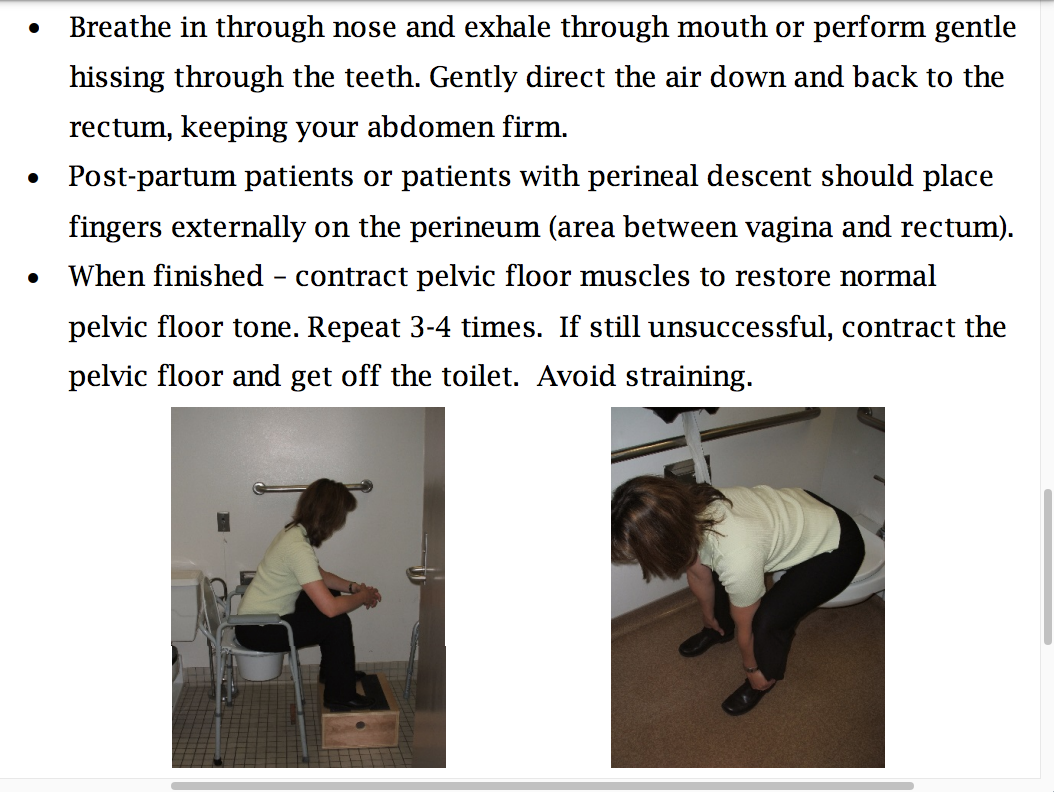
The University of Michigan offers healthy bowel habits worksheet with all sorts of tips. One of them is to raise your knees higher, to sit lower, or both. So it appears there's medical evidence to support benefits of a Squatty Position, which is the opposite of what a raised toilet gets you.
Can a raised toilet seat cause toilet time challenges, like constipation, incomplete excretion, or even pebble poop like a goat rabbit? In my experience, using a raised toilet seat has hindered my ability to pass complete bowel movements in one sitting. Even worse, it's just not an enjoyable to poop anymore.
Men, remember always put the toilet lid down. Except now you can't, since the raised toilet is now in the way.
Pooping on a raised toilet as an average, 35-year-old able-bodied person, tall-ish at 5 feet 11 inches height, slim-ish build at 170 pounds?
I don’t particularly enjoy pooping on a raised toilet seat.
I suspect it contributes to “incomplete poops”, where you expel one bowel movement over two or three rounds of sitting. I wish I would be able to pass the complete bowel movement all in one timely sitting.
I've never maintained an extra-healthy digestive system. Between irregular sleep, eating, stress, and diet, I'll get diarrhea or difficult-to-wipe-clean stool regularly. Since my family has been working together on a weekly schedule, I've been eating more regularly, and start most weekdays with a regular morning dump.
Anyone who cares for someone with Parkinson’s know how unpredictable Parkinson’s can be in terms of “on and off times”.
During off times, my dad needs help getting up from his chair. He uses his rolling walker to get to the bathroom, then he needs help sitting down onto the toilet, cleaning up after, and standing up off of the toilet.
It doesn’t always go so well. In the past month, my mom has cleaned poo off the bathroom floor once after my dad's use... But that's "just part of the job".
It doesn’t always turn into a mess either. My dad goes to the bathroom by himself (Number Two) when he can. His current success rate taking a poop independently is one in five, only during on times.
Constipation, incomplete bowel movements, and extra strain to complete a bowel movement are common worries associated with the elevated toilet.
Yet if we choose to use a raised toilet in our homes, there must be some benefit.
This summarized list of pros and cons when using a raised toilet seat is a good reminder about the relationship between quality of life and quality of bowel movement.
I'd like to reserve this post for the express purpose of unpacking quality of dump when using a raised toilet as an adult without a disability. So I'll stay on the sticky topic of defection.
I'd prefer to discuss urination, particularly male urination from a standing up position, in a dedicated posts in order to record all important details and talking points.
On the topic of raised seat urination, I will only be able to speak from a man's perspective. This is a differentiation I believed irrelevant in the discussion of defection. This assessment of bowel movements on a raised toilet applies to both men and women. I'd imagine the art of making is not much different by gender?
How does the raised toilet seat affect your bowel movements?
Healthy poops, healthy life. You wouldn't be the first person worried about constipation, incomplete bowel movements, or extra strain required to complete a bowel movement.
When you can't poop or expend extra effort to achieve subpar poops, it affects your quality of life.
Quality of dump is verifiably important.