Graycare (graycare.net) is a participant in the Amazon Services LLC Associates Program, an affiliate advertising program designed to provide a means for us to earn fees by linking to Amazon.com and affiliated sites. Learn More

Caregivers and their clients use gait belts to safely walk together.
The caregiver walks alongside the client holding onto the gait belt, to prevent trips and falls in case the client runs into trouble.
Shop Secure Safety Solutions on Amazon #ad
A standard gait belt with metal buckle and an elastic belt loop holder, and funky prints just for fun.

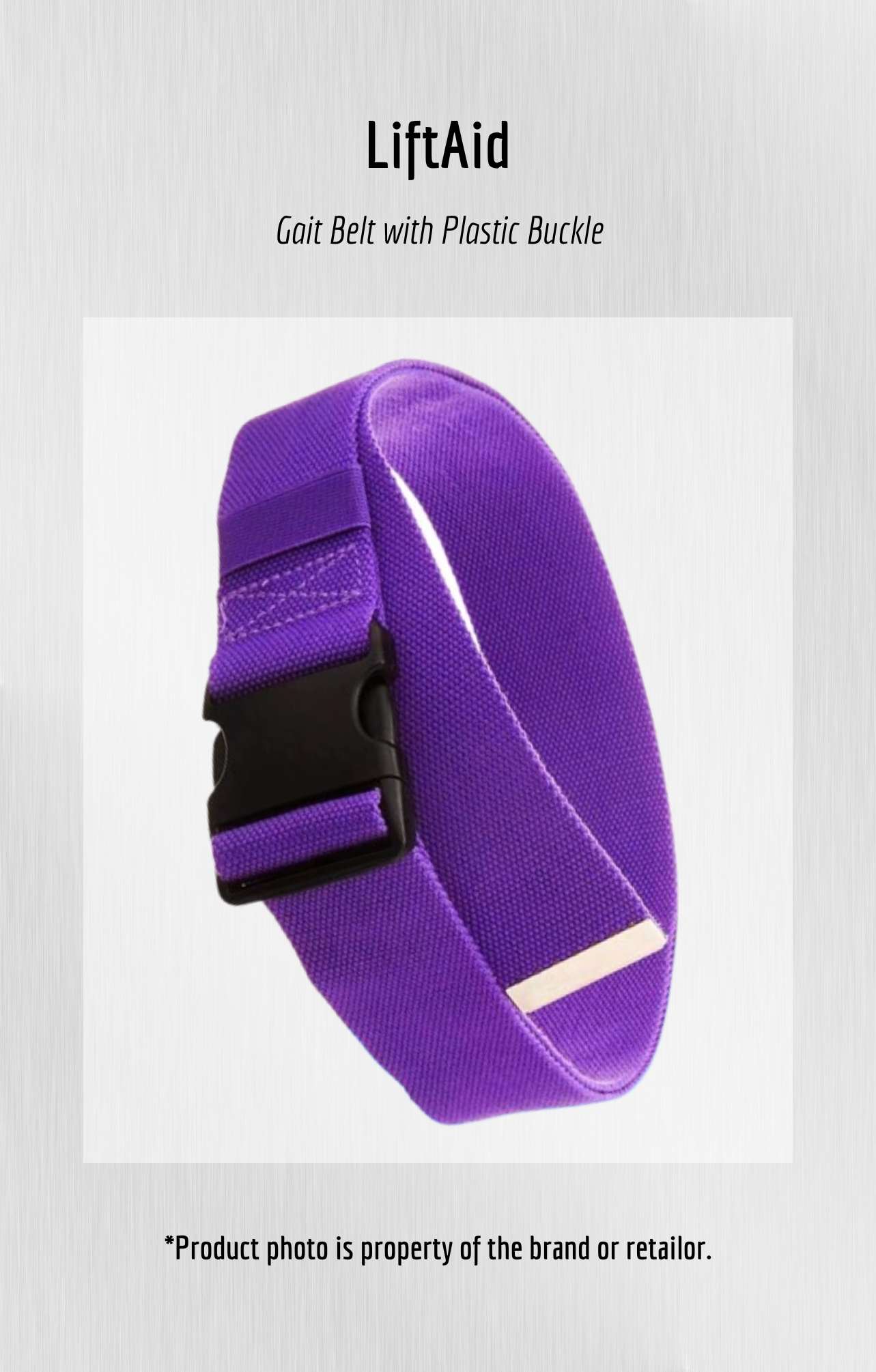
A standard gait belt with side-release plastic buckle and an elastic belt loop holder.
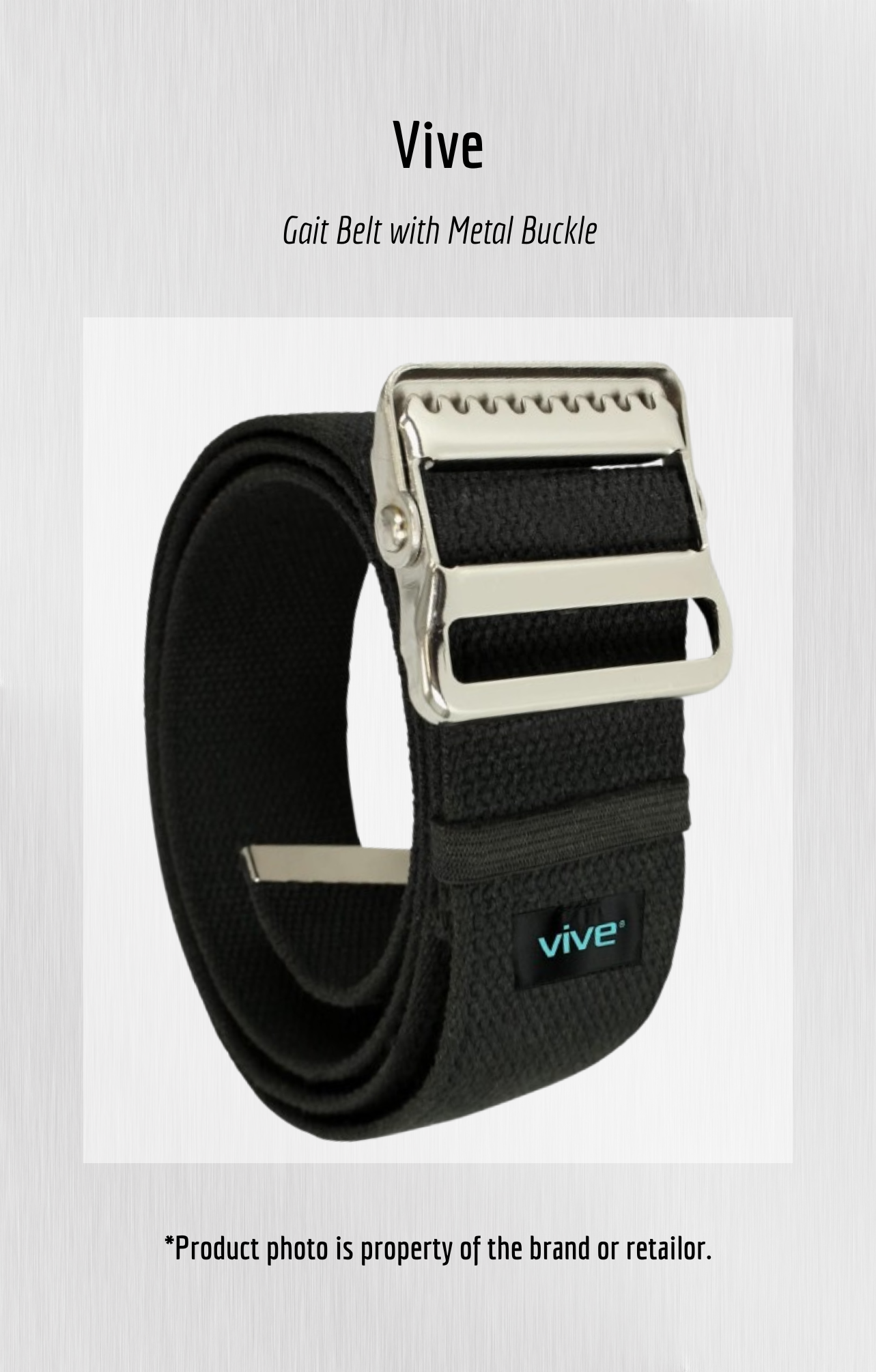
Another standard gait belt with metal buckle and an elastic belt loop holder.
Both gait belts and transfer belts are used by caregivers to support clients mobility within their environment.
Despite their differences in complexity and number of handles, both gait belts and transfer belts can be used by caregivers to perform transfers from sitting to standing and ambulation (walking) from one place to another.
Both are equally as effective for ambulation, but transfer belts - with their multiple handles for the caregiver’s leverage and soft padding for the client’s comfort - are more appropriate for more strenuous lifting and heavier clients.
Although simpler, gait belts, are preferred by seniors who walk fashion forward because gait belts are available in fun bright colors and prints that look nice compared to black medical-looking transfer belts.
A standard gait belt has a metal buckle with locking teeth, like a belt buckle without a prong, since the teeth dig into the belt material.
Some newer gait belts have a plastic buckle, with the common side-release mechanism.
A metal buckle is more durable and withstands greater weight, up to 300 pounds, but a plastic buckle can quick-release to remove the belt much faster.